From “Failed Case” to Aspiring Director of the Year
The first thing I thought when I got the email saying I’d been nominated for an Institute of Directors award was, That’s a scam.
I’d just been on the IoD website. I was weighing up whether to join the Federation of Small Businesses, the Chamber of Commerce or the IoD. Then I got an email telling me I’d been nominated for an award. I assumed it was cookies. I genuinely thought they’d seen me looking at the membership page and decided that telling me I’d been nominated was a good way to get me to sign up. I remember thinking, That’s Outrageous. Surely they can’t be doing all that for a membership?
The other reason I thought it was a scam was harder to admit. I didn’t think I’d done enough to be nominated.
I asked around. The email looked legit, so I filled in the form half as a joke. Yeah, let’s see where this goes. Then more emails came. Each time, I took it a little more seriously. It was only when the IoD put the finalists on its own website and I saw my name that I finally believed it.
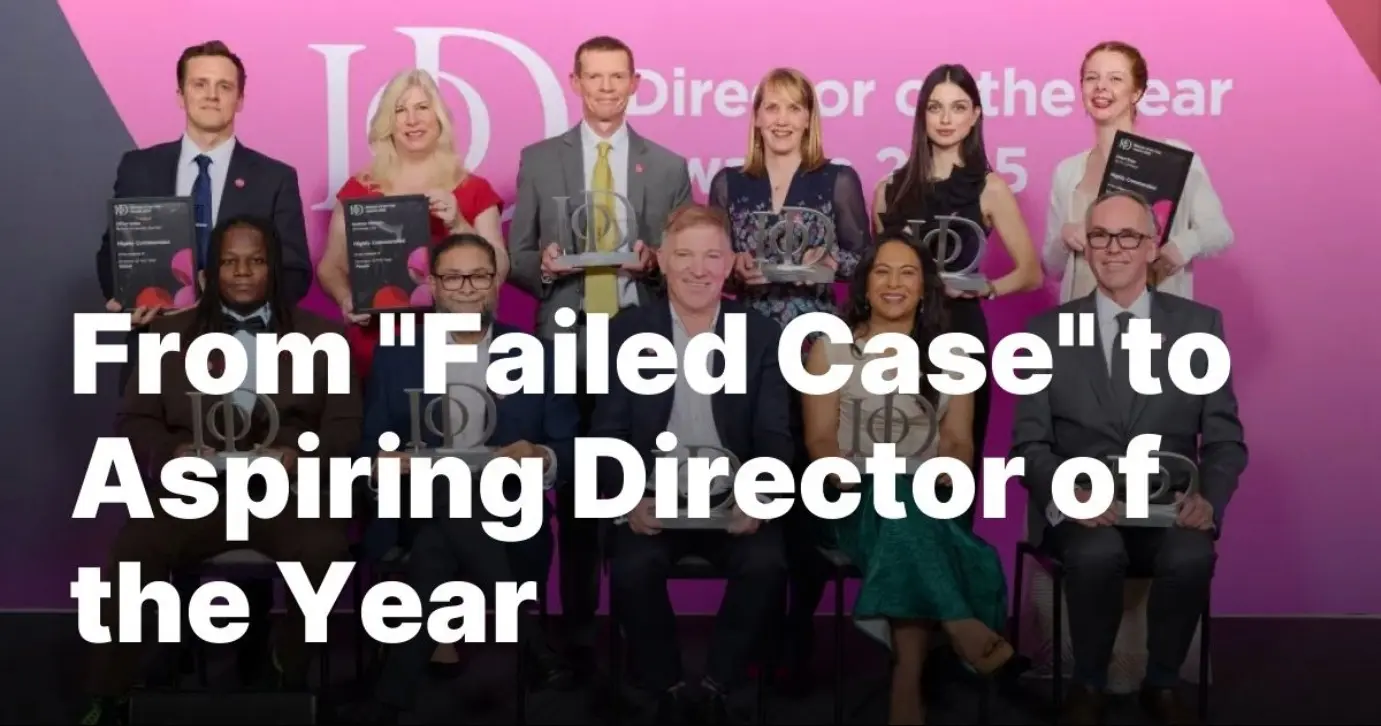
On 14 November 2025, I went to the Grand Hotel in Birmingham as a finalist and came home as the Institute of Directors’ Aspiring Director of the Year 2025.
“For a kid born into the care system, this feels surreal.”
That’s what I wrote after winning. Looking back, the part that tells you the most about me is how long it took me to believe I’d even been nominated. Institute of Directors award announcement
I was measuring Bee N Spired against everything I still wanted to do
I knew the work we’d put into Bee N Spired. I could tell you about the young people we’d reached and the opportunities we’d created. Ask me about our Bees and I’ll happily tell you what they’ve achieved. Ask me what I’ve achieved and I’m already thinking about the young people we haven’t reached yet and what I wish we could offer them.
That’s where the imposter syndrome crept in. I was looking at the gap between where Bee N Spired was and where I wanted it to be. In my head, there was always something else I needed to do before I could say I’d done enough.
I still have to remind myself that it’s early doors. I’ve got big plans for Bee N Spired and some of them will take years. In the meantime, the young person who came back for a second session, tried something they’d never done before or found a course they actually wanted to apply for had that experience now. I owe it to them to pay attention to what’s already happened, even while I’m thinking about what comes next.
What growing up in care taught me to expect
I can laugh now about thinking it was cookies. I also know why I was so quick to find another explanation for something good happening to me.
I grew up in care around Greenwich and Deptford and moved between foster homes and schools. When you’ve been let down enough times, you learn to be careful about what you let yourself look forward to. A plan gets made, then it changes. Someone says they’ll do something, then you find yourself waiting. After a while, you stop telling people you were excited in the first place. It feels easier that way.
You can lose hope in small ways. You start saying “I don’t know” when someone asks what you want, even when you do know. You think twice about telling anyone what you’re looking forward to. When something good does happen, you wait for the catch. I carried that into adulthood. There I was, running an organisation, and my first response to being nominated for an award was to come up with a whole theory about how they were trying to sell me a membership.
Somewhere along the way, I’d learnt to expect that good things didn’t happen for people like me. I’m still unlearning that. I’m learning to let myself be pleased when something goes well and to trust that the people recognising my work might actually mean it
A case file tells you what’s happened so far
“Failed case” is a phrase that stayed with me. Say it about a child and you make it sound as though their life has already been assessed and the result is in. That child still has to wake up the next day, go to school and try to imagine a future. It matters what they’ve been led to expect from it.
Years later, London Met gave me the opportunity to study Business Management. I got to spend time around people who wanted to hear what I thought and see what I could do with an idea. I went on to build Bee N Spired because I wanted more young people to get that kind of chance while they were still figuring things out.
That can start with something as ordinary as asking a young person what they’re into and doing something with the answer. If they say music, get them into a studio. If they spend half their time drawing, let them see where that skill could take them. Give them enough time to try it, change their mind and come back if they want to. When you’ve had a lot of decisions made for you, getting to decide what you want to do next can mean a lot.
What the award means to me now
There were times I couldn’t picture much beyond getting through the week. I went on to graduate, build Bee N Spired and hear my name called in a room full of directors in Birmingham. I had to do the work, and I needed people to give me chances along the way. You deserve those chances too, even on the days you can’t see what you’d do with them yet.
When I look at the award now, I think about the younger me who would’ve laughed if you’d told him he’d win it. To be fair, the grown-up me thought it was a scam. I’m proud I filled in the form anyway. I’m proud I won. That trophy is proof to me that where you start in life doesn’t get to decide how far you can go.
To every young person who’s been called “too much”, “too broken” or “hard to reach”:
You are not your file. You are not your past. You are not what they say about you.



We Are Proudly Sponsored By