


Youth Enrichment Summary
Youth enrichment. You’ll have heard the term; from teachers, local authorities, Ofsted reports, and lately from the Government itself, which committed £88 million to expanding enrichment opportunities for young people across England in 2025.
But what does it actually mean? And more importantly, what does it look like for the young people in London and the South East who need it most?
This guide covers everything: what youth enrichment activities are, why they matter, what the research says about their impact, and how to find programmes that change outcomes for young people.
We’ll also explain what makes Bee N Spired’s approach different, and why we believe the best enrichment activity isn’t just fun – it’s transformational.
What Are Youth Enrichment Activities?
Youth enrichment activities are structured, purposeful experiences designed to develop young people’s skills, confidence, creativity, and wellbeing beyond the standard school curriculum. They span creative arts, STEAM (Science, Technology, Engineering, Art, and Maths), enterprise, sport, performing arts, digital skills, and life skills programmes – and are most impactful for young people aged 14 – 25.”
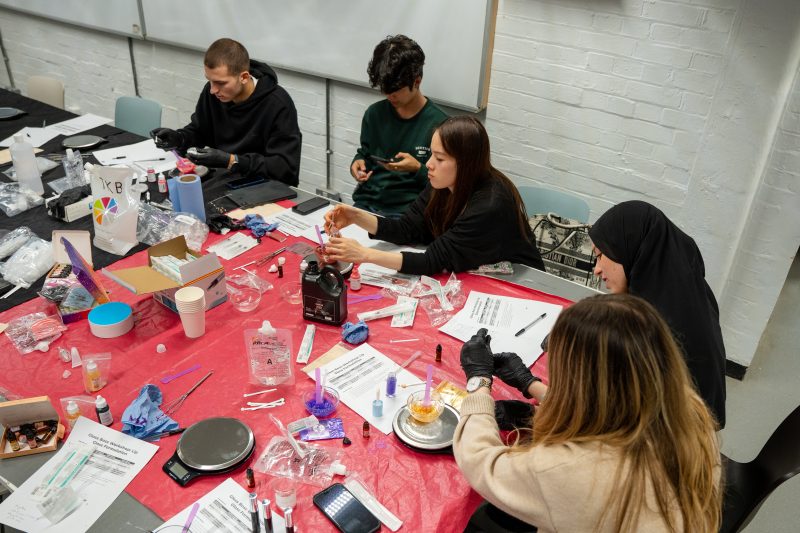
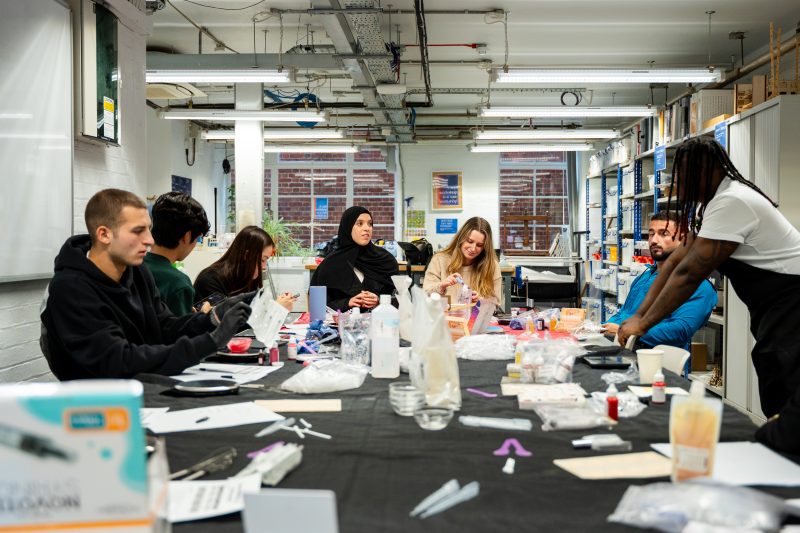
Unlike standard lessons, enrichment activities are built around engagement first. They create the conditions for learning by doing: making things with your hands, solving real problems, working alongside professionals, and producing something you’re proud of. The outcome might be a product you’ve designed and branded, a track you’ve produced, a performance you’ve delivered, or a qualification you’ve earned.
The best youth enrichment activities connect with who young people actually are – not who we think they should be.
They meet young people in their interests and build outward from there.
The Difference Between Enrichment and Extra-Curricular
It’s worth being clear: enrichment activities and extra-curricular activities are related but distinct on their own.
Extra-curricular activities (school sports teams, drama club, the school choir) are typically school-led, school-timetabled, and available mainly to those who are already engaged in the school system.
Youth enrichment activities are a broader category, often delivered by specialist organisations outside school, frequently aimed at young people who are disengaged from formal education, and increasingly linked to accredited qualifications and pathways to employment.
Why Youth Enrichment Activities Matter
The case for youth enrichment has never been stronger. Research consistently shows that young people who access high-quality enrichment programmes are more likely to complete their education, develop stronger mental health, and transition successfully into employment or further study. And yet, access remains deeply unequal – particularly for young people in London and across the South East.
£88m
400+
Government “Building Creative Futures” investment for youth enrichment (2025)
Schools set to receive tailored enrichment funding across England
4.9/5
79%
Of Bee N Spired participants re-engage after their first session
Average satisfaction rating across Bee N Spired programmes
In August 2025, Prime Minister Keir Starmer announced the “Building Creative Futures” package – the largest single investment in youth enrichment in over a decade. It included £22.5 million specifically to fund enrichment offers in up to 400 schools, giving pupils access to sport, art, music, outdoor activities, and the kinds of hands-on experiences that build confidence and life-ready skills. This followed research commissioned by DCMS and delivered by UK Youth, which confirmed what practitioners have long known: the barriers to participation in youth activities are structural, not personal.
The young people not accessing enrichment aren’t choosing not to. They’re being failed by systems that don’t reach them.
For young people in London and the South East specifically, the picture is stark. The capital has extraordinary cultural wealth and world-class institutions, but it also has some of the highest rates of youth poverty, exclusion from school, children in care, and involvement with youth justice in the country. For those young people, access to high-quality enrichment isn’t a nice-to-have. It’s a lifeline!
Types of Youth Enrichment Activities
Youth enrichment is a broad field. Here is a breakdown of the main categories, with notes on what makes each type effective for young people aged 14 – 25.
CATEGORY
EXAMPLES
KEY SKILLS DEVELOPED
BEST FOR
STEAM
High Impact
Cosmetic science, engineering, product design, robotics, coding
Problem-solving, critical thinking, numeracy, creativity
All ages 14+; particularly strong for disengaged learners
CREATIVE ARTS
High Impact
Visual art, tattoo design, illustration, graphic design, fashion
Creative confidence, fine motor skills, self-expression
Young people who struggle with academic routes
PERFORMING ARTS
High Impact
Dance, music, theatre, spoken word, film-making
Communication, confidence, teamwork, emotional literacy
Young people with social anxiety or expressive needs
ENTERPRISE & ENTREPRENEURSHIP
Business planning, product development, marketing, branding
Financial literacy, resilience, initiative, pitching
Young people interested in independence and careers
LIFE SKILLS
High Impact
Financial literacy, housing rights, cooking, independent living
Practical self-sufficiency, confidence, future-readiness
Care-experienced young people aged 16 – 18
DIGITAL SKILLS & MEDIA
Content creation, social media, podcasting, video production
Digital literacy, communication, self-promotion
Tech-engaged young people aged 14 – 18
SPORT & PHYSICAL WELLBEING
Football, martial arts, yoga, dance fitness, outdoor adventure
Physical health, discipline, teamwork, mental resilience
Young people needing structured physical activity
NATURE & ENVIRONMENT
Gardening, conservation, forest school, urban farming
Environmental awareness, patience, science, responsibility
Young people who thrive outdoors; trauma-informed settings
Table: Main categories of youth enrichment activities with engagement indicators for the 14 – 25 age group.
The most effective youth enrichment activities don’t fit neatly into one box. The best programmes blend multiple categories; combining STEAM with enterprise, or arts with life skills. That way young people experience learning as integrated and relevant, not siloed and abstract.
The Benefits of Youth Enrichment Activities
The research evidence on the benefits of youth enrichment activities is substantial and growing. Here’s what young people consistently gain from quality enrichment programmes:
Confidence and Self-Esteem
Many young people; especially those who have experienced exclusion, trauma, or disruption, arrive at enrichment programmes with low self-worth. Structured, hands-on activities that produce something real and tangible are particularly powerful here. When a young person makes a product, performs in front of peers, or completes a project they’ve led, something shifts. They have evidence that they can do things. That evidence matters.
Improved Academic Engagement
Counterintuitively, enrichment activities that appear to take young people away from academic work tend to draw them back into it. When young people experience success in a practical context, for example, when they see that science is inside the cosmetics they make, or maths is in the recipe they’re scaling up, they re-engage with formal learning. Enrichment activities are proven to improve attendance, reduce exclusions, and raise attainment when delivered well.
Employability and Career Readiness
Industry-connected enrichment – where professionals deliver sessions, young people work with real materials, and the skills map to actual careers, gives young people something invaluable: a sense of possibility. Many young people in disadvantaged circumstances have never had an adult say to them,
“This could be your career.” Enrichment activities open doors by making career pathways visible and accessible.
Mental Health and Resilience
Creative and expressive enrichment activities are evidenced to reduce anxiety and improve mental wellbeing in young people. The combination of flow state (deep absorption in a task), social connection, and the experience of mastering something new is a powerful intervention. For young people experiencing trauma, enrichment activities offer a structured, safe context for processing and rebuilding.
Social Skills and Peer Connection
Group enrichment activities teach young people to work collaboratively, manage conflict, support peers, and communicate across differences. These are the social and emotional learning (SEL) skills that employers consistently rank among the most important for the workplace – and that are hardest to develop in a purely academic setting.
Youth Enrichment Activities in London & the South East
London is one of the most exciting cities in the world for young people; but it is also one of the most unequal. The same city that hosts world-class museums, design schools, and creative industries is home to some of the highest rates of child poverty in England. In boroughs like Newham, Tower Hamlets, Hackney, and Haringey, significant proportions of young people are growing up without access to the kinds of enrichment experiences that shape futures.
What the South East Looks Like for Young People
Beyond inner London, the South East of England presents its own distinct challenges. Young people in suburban and outer London boroughs; including Redbridge, Hammersmith and Fulham, Barking and Dagenham, and the surrounding Home Counties often fall into a gap: too far from central London’s cultural provision, and not part of rural communities with strong outdoor and nature-based enrichment traditions. The result is a generation of young people who are technically near to opportunity but practically very far from it.
The demand for quality youth enrichment activities in London and the South East significantly outstrips supply, especially for older teenagers and young adults aged 16 – 20, for whom very little structured provision exists outside of school or college.
Who Provides Youth Enrichment in London?
- Schools and colleges, which may commission specialist enrichment providers for curriculum-embedded or after-school delivery
- Local authorities, particularly children’s services and corporate parenting teams, who commission targeted enrichment for looked-after children and care leavers
- Community organisations and charities, delivering neighbourhood-level activities with a focus on inclusion and reach
- Social enterprises, like Bee N Spired, which operate commercially (through schools and corporates) to fund free provision for underserved young people
- Arts and culture organisations, museums, galleries, and theatres with education and youth outreach programmes
A Note on Bee N Spired’s Reach
Bee N Spired CIC delivers youth enrichment activities across London (including boroughs such as Hammersmith & Fulham, Redbridge, and the City), Norfolk, and is expanding into Oxfordshire in 2026. Their workshops are available to schools and colleges across the South East, with in-school or on-location delivery.Enrichment for Young People Who Need It Most
Not all young people arrive at the starting line equally. For some, a missed enrichment activity is a minor inconvenience. For others, the absence of enrichment is the absence of the only stable, supportive, growth-oriented experience in their week.
Care-Experienced Young People
Young people who are looked after, in foster care, or who have aged out of the care system face a radically different set of life circumstances to their peers. They are statistically more likely to experience school exclusion, mental health challenges, involvement with the criminal justice system, and homelessness. Access to high-quality, trauma-informed enrichment activities; delivered by people who understand their experience, can genuinely change their trajectories.
At Bee N Spired, our founder Rees Davis-Campbell grew up in care. That lived experience shapes everything about how we design and deliver our programmes. We don’t just run enrichment activities for care-experienced young people. We build them around what we know those young people actually need.
Young People in Alternative Provision and PRUs
Young people in Pupil Referral Units (PRUs) and alternative provision settings are among the most underserved in the enrichment landscape. Standard enrichment activity providers are often reluctant or ill-equipped to work in these settings. Bee N Spired specifically designs programmes for PRUs and alternative provision, adapting content and delivery style to meet the needs of young people who have experienced rejection by mainstream educational settings.
Young People Known to Youth Justice
For young people involved with Youth Offending Teams or leaving custody, enrichment activities that are non-judgmental, skills-focused, and connected to genuine future pathways are particularly powerful. Our programmes specifically support rehabilitation through education and creativity for those leaving custody.
Young People with SEND
Enrichment activities that are practical, hands-on, and structured, (rather than purely academic), are often highly effective for young people with special educational needs and disabilities. Many of our workshop formats are naturally inclusive: they don’t require a particular reading level, they allow for different learning styles, and they produce tangible outcomes that all participants can be proud of.
Accredited Youth Enrichment: Going Beyond Fun
There is a version of enrichment that is purely about experience: fun, engagement, and a good afternoon with friends. And that has value. But there is a higher ambition available; enrichment that produces recognised credentials alongside the experience, so that young people walk away with something they can put on a CV, a UCAS application, or a funding form.
Why Accreditation Matters?
For young people from disadvantaged backgrounds, qualifications are often the first tangible, portable evidence that they are capable. Many care-experienced and at-risk young people arrive at our programmes with little or no formal qualification to their name, not because they lack intelligence or ability, but because the systems around them have failed to recognise and accredit their potential.
Enrichment activities tied to accreditation change this. They give young people real, portable currency: something an employer can see, something a further education provider can act on, something a young person can point to and say, “I did this.”
City & Guilds: The Gold Standard for Practical Qualifications
Bee N Spired’s programmes are accredited by City & Guilds, one of the most respected qualification bodies in the UK. Participants in our longer-form programmes can achieve qualifications from Entry Level to Level 3; with our Level 3 award being equivalent to the first year of an A-Level. These are not participation certificates. They are nationally recognised qualifications that open real doors.
What Bee N Spired Participants Can Achieve- City & Guilds qualifications – Entry Level to Level 3
- Personal and Social Skills (5546) at Level 1,
- Level 2 employability skills,
- EPQ (2935-03) at Level 3, worth up to 28 UCAS points.
- ILM Level 2 Young Leaders Award.
- Level 3 award equivalent to the first year of an A-Level
- Two qualifications within a single programme journey
- Curriculum covering: housing rights, financial literacy, mortgage demystification, healthy independence, navigating the care and criminal justice system
How Bee N Spired Delivers Youth Enrichment Activities in London
Bee N Spired CIC is a London-based social enterprise providing hands-on STEAM workshops, creative enrichment programmes, and accredited qualifications for young people aged 14 – 25. We operate across London, Norfolk, and the wider South East of England; with expansion planned across the region through 2026.
What makes us different isn’t just what we deliver. It’s the model we deliver it through.
Our Workshops Offer
Our school-facing workshops are industry-led, hands-on, and designed to engage students who don’t always engage. They are adaptable for Year 7, PRUs, and alternative provision settings. Popular workshops include:
- Gloss Boss – Cosmetic science meets enterprise. Young people create, brand, and launch their own beauty product, applying chemistry, branding, and business skills in a single session.
- Ink-Spired – A deep dive into tattoo art and the tattoo industry. Young people sketch original designs, create stencils, and practise on synthetic skin while learning about the business and professional practice of tattooing.
- Bee-yond the Beat – High-energy dance and music sessions that build confidence, self-expression, and joy. Designed to engage young people who respond to movement and sound.
- Bee-hind the Mic – Giving young people a voice and chance to express their interests with others. Designed to build confidence and social skills by discussing topics they are passionate about.
The Inspire Programme: Free for Those Who Need It
Our flagship Inspire Programme runs for 9.5 months with a 12 month mentoring service called Beelong, delivering hands-on STEAM workshops, skills training, and City & Guilds qualifications to young people who are care-experienced, estranged from family, or involved with youth justice services. The programme is completely free for eligible participants – no catches, no referral fees, no hidden costs.
Funding for the Inspire Programme comes directly from the social enterprise model: every workshop booking by a school or corporate client helps fund a free programme place for a young person who needs it. It is a genuine social value loop.
For Schools and Local Authorities
Schools and local authorities across London and the South East can book Bee N Spired workshops or commission programme delivery. We work with:
- Schools and colleges (Year 7, PRU, and alternative provision)
- Local authority children’s services and corporate parenting teams
- Youth Offending Teams
- Social work teams making referrals for individual young people
How to Choose the Right Youth Enrichment Programme
Not all enrichment programmes are created equal. Whether you are a teacher looking to commission enrichment for your school, a social worker seeking provision for a young person on your caseload, or a parent exploring options for a teenager, here are the key questions to ask:
- Is the programme genuinely hands-on, or is it lecture-based? The best enrichment for teenagers involves doing, not watching.
- Are the facilitators industry-connected? Practitioners with real-world experience are far more compelling to young people than generalist educators.
- Is the programme adaptable for different needs? Can it work for young people with SEND, or those in alternative provision?
- Does it lead anywhere? Look for programmes that offer accreditation, pathways to further opportunities, or clear connections to employment.
- Is there evidence of impact? Ask for data on re-engagement rates, completion rates, and participant feedback.
- Is it genuinely inclusive? Does the programme have a safeguarding policy? Is it delivered by professionals with lived experience of the challenges faced by young people?
- What happens after? The best enrichment programmes don’t just deliver a single session and disappear. They build relationships, provide follow-up support, and open doors to next steps.
Frequently Asked Questions About Youth Enrichment Activities
What are youth enrichment activities?
Youth enrichment activities are structured, purposeful experiences designed to develop young people’s skills, confidence, creativity, and wellbeing beyond the standard school curriculum. They include creative arts, STEAM (Science, Technology, Engineering, Art, and Maths), enterprise, sport, performing arts, digital skills, and life skills programmes. They are most impactful for young people aged 14 – 25, and are particularly transformative for those who face disadvantage or are disengaged from mainstream education.
What are the benefits of youth enrichment activities?
Youth enrichment activities build confidence and self-esteem, improve academic engagement, develop employability skills, strengthen mental health and resilience, and provide meaningful peer connections. For young people facing disadvantage, (including those who are care-experienced or at-risk), enrichment activities can be transformative, opening pathways to qualifications, employment, and independent living.
Are there free youth enrichment activities in London?
Yes. Several organisations in London offer free youth enrichment activities for young people who are care-experienced, estranged from family, or involved with youth justice services. Bee N Spired CIC, based in the City of London, offers completely free enrichment programmes, including accredited City & Guilds qualifications, for eligible young people aged 14 – 25 across London. These places are funded through their social enterprise model, where commercial workshop bookings by schools and businesses subsidise free provision for those who need it most.
What enrichment activities are most effective for teenagers?
For teenagers aged 14 – 25, the most effective enrichment activities are hands-on, industry-connected, and produce a tangible outcome. Top performers include STEAM workshops (cosmetic science, engineering, product design), creative arts (visual art, tattoo design, music production), enterprise projects, performing arts and dance, and life skills programmes.
The key differentiator is engagement: teenagers respond to activities that feel relevant to real life, not extensions of school. A session where they make something, design something, or perform something will always outperform a passive workshop.
What is the difference between enrichment activities and extra-curricular activities?
Extra-curricular activities are typically school-led additions to the timetable, sports teams, drama club, chess club, etc, available mainly to young people already engaged in school.
Youth enrichment activities are a broader category: often delivered by specialist organisations outside school, designed specifically for young people who may be disengaged, and increasingly linked to accredited qualifications and employment pathways. Enrichment goes further: it is designed not just to extend learning but to transform it.
How can I refer a young person to a youth enrichment programme in London?
To refer a young person to Bee N Spired’s free Inspire Programme in London, you can complete the online referral form at beenspired.org or contact the team directly at queenbee@beenspired.org or on 020 3875 6226The programme is open to young people aged 14 – 25 who are care-experienced, estranged from family, or known to youth justice services. Schools, local authorities, social workers, and family members can all submit referrals.
Do youth enrichment activities lead to qualifications?
They can, and the best ones do. Bee N Spired’s Inspire Programme leads to City & Guilds qualifications from Entry Level to Level 3, with the Level 3 award equivalent to the first year of an A-Level. This combination of enrichment and accreditation is relatively rare in the sector, and particularly powerful for young people who have missed out on formal qualifications through disrupted education or care experience.
Can schools in London commission youth enrichment workshops?
Yes. Schools and colleges across London and the South East can book Bee N Spired workshops for delivery in school; adaptable for Year 7, PRU, and alternative provision settings. Workshops are available as one-off sessions (from £1,200) or as annual partnerships of six workshops. Every booking creates a social impact: revenue from school workshops directly funds free programme places for care-experienced young people.
Ready to Bring Youth Enrichment to Life?
Whether you’re a school, a local authority, a business, or a family – Bee N Spired has a pathway for you. Every booking or referral creates real change for young people in London and the South East.
Written by Bee N Spired CIC
Bee N Spired is a Community Interest Company based in the City of London, delivering youth enrichment activities, STEAM workshops, and accredited programmes for young people aged 14 – 25 across London, Norfolk, and the South East of England. Founded by Rees Davis-Campbell, a care leaver and award-nominated Director of the Year, with the mission of writing young people back in when too many systems write them off. Accredited by City & Guilds. Supported by Foot Locker, Co-op, and other leaders.

Leave a Reply